Bridge and withdraw
Move USDC from Arc to Base, Ethereum, Arbitrum, Optimism, Polygon or Avalanche, to you or anyone, at the best of seven bridges; bring USDC to Arc with no gas; withdraw any token to an exchange, your own wallet or your bank.
Bridge, step by step
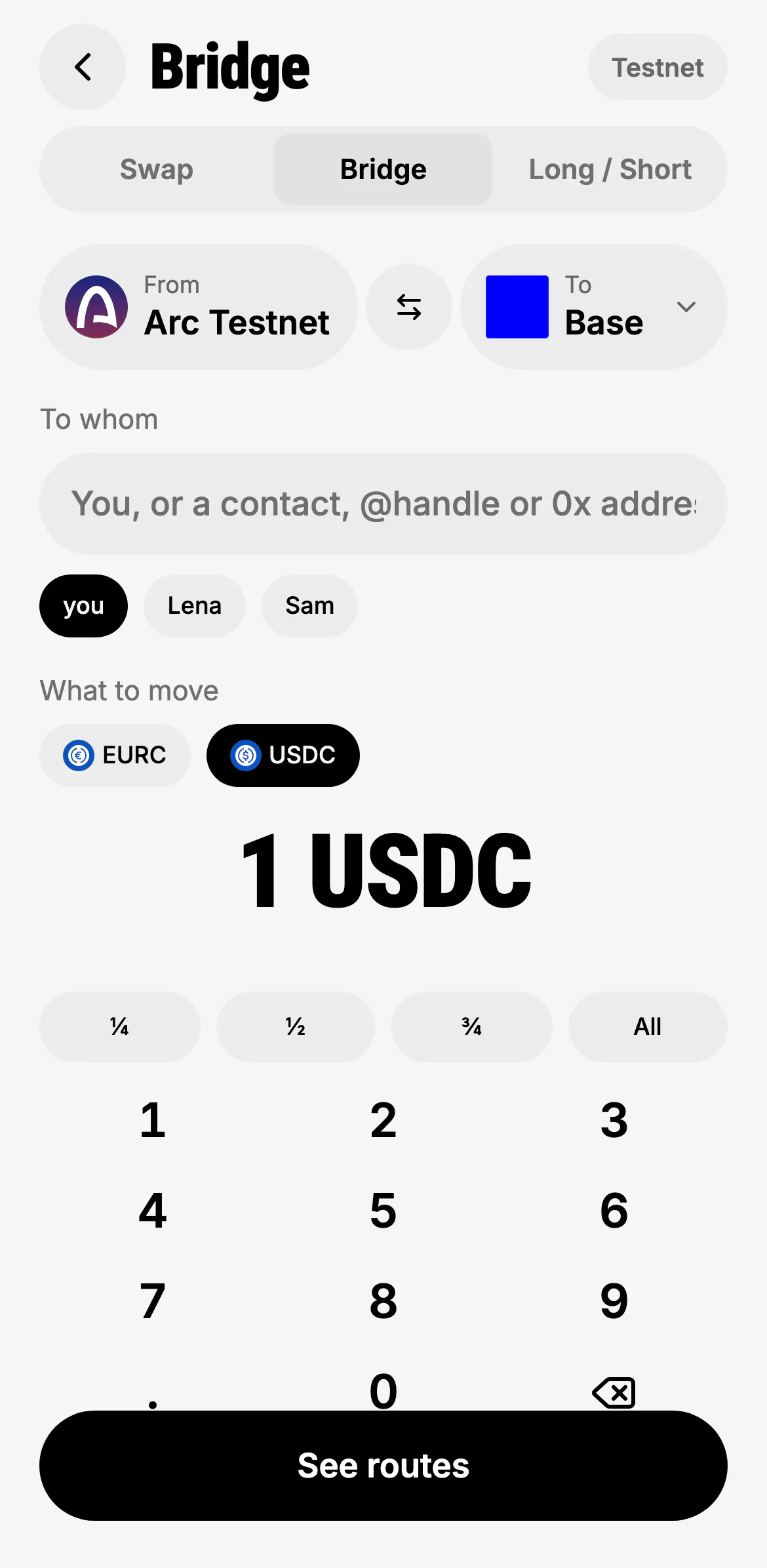
Bridge from + (or Swap's Bridge tab), or ask: "send 20 dollars to Alex on Base", "move 1 dollar to Base".
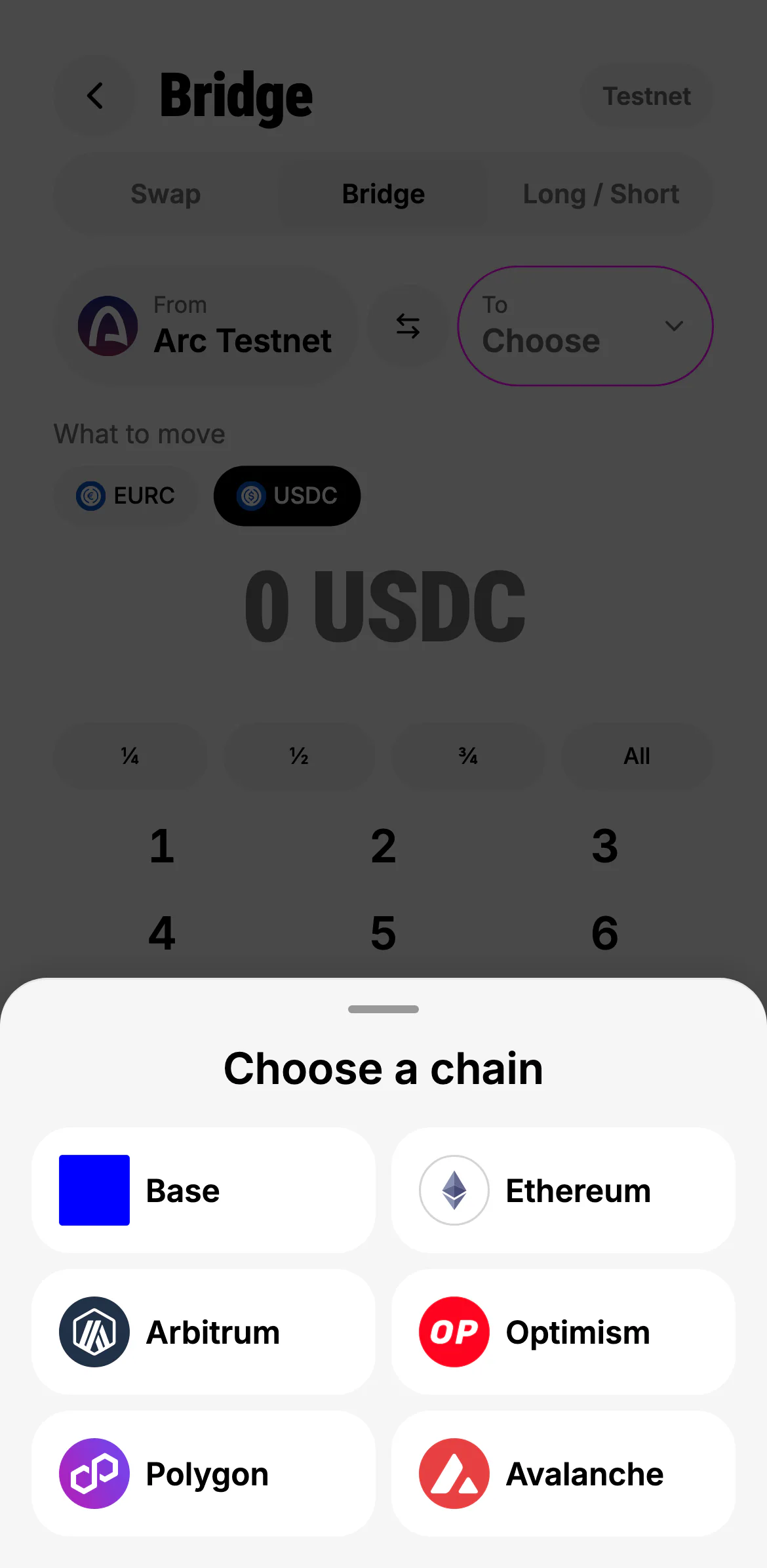
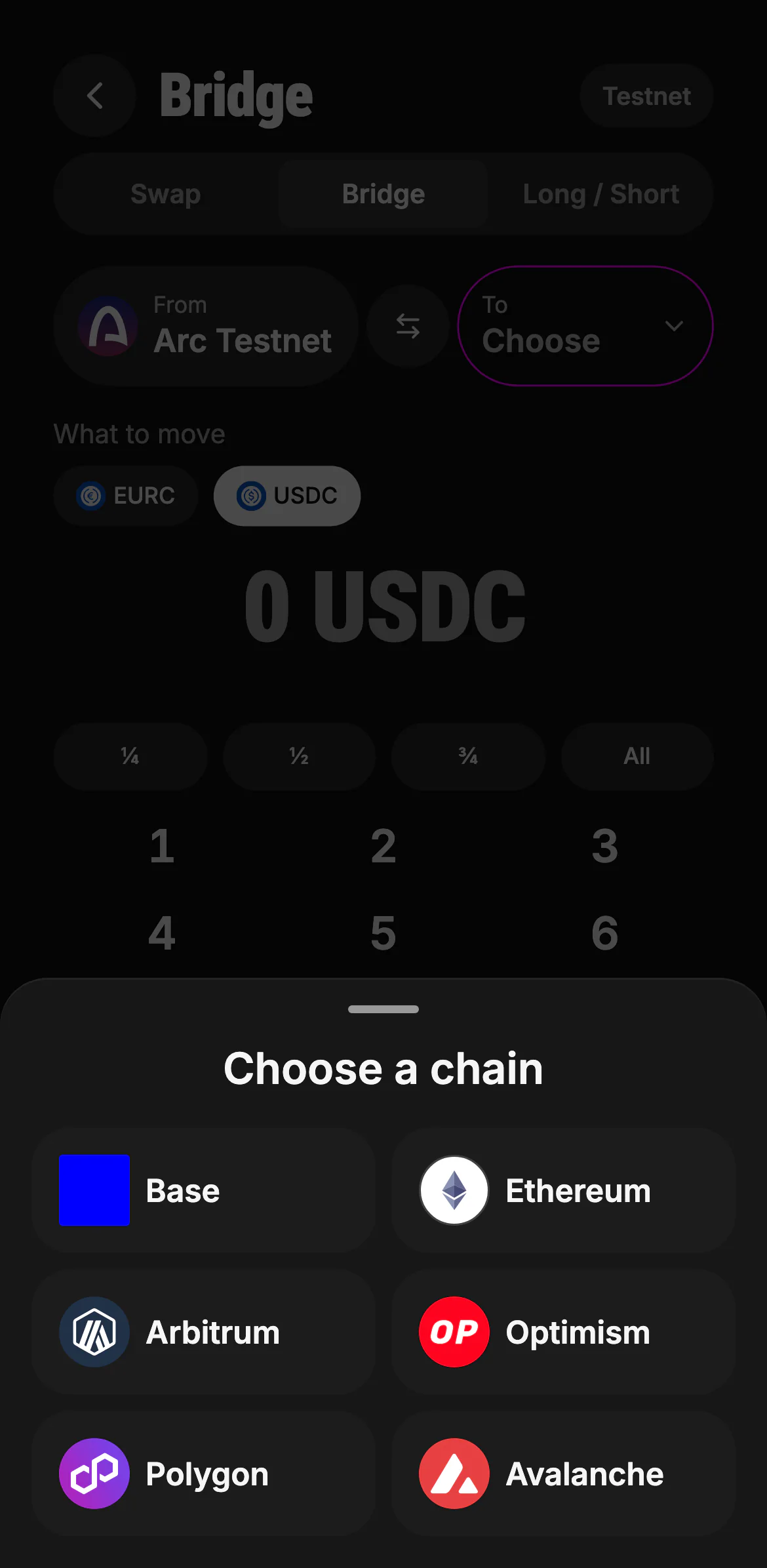
Base, Ethereum, Arbitrum, Optimism, Polygon or Avalanche, each with its own mark.
- Where it should arrive
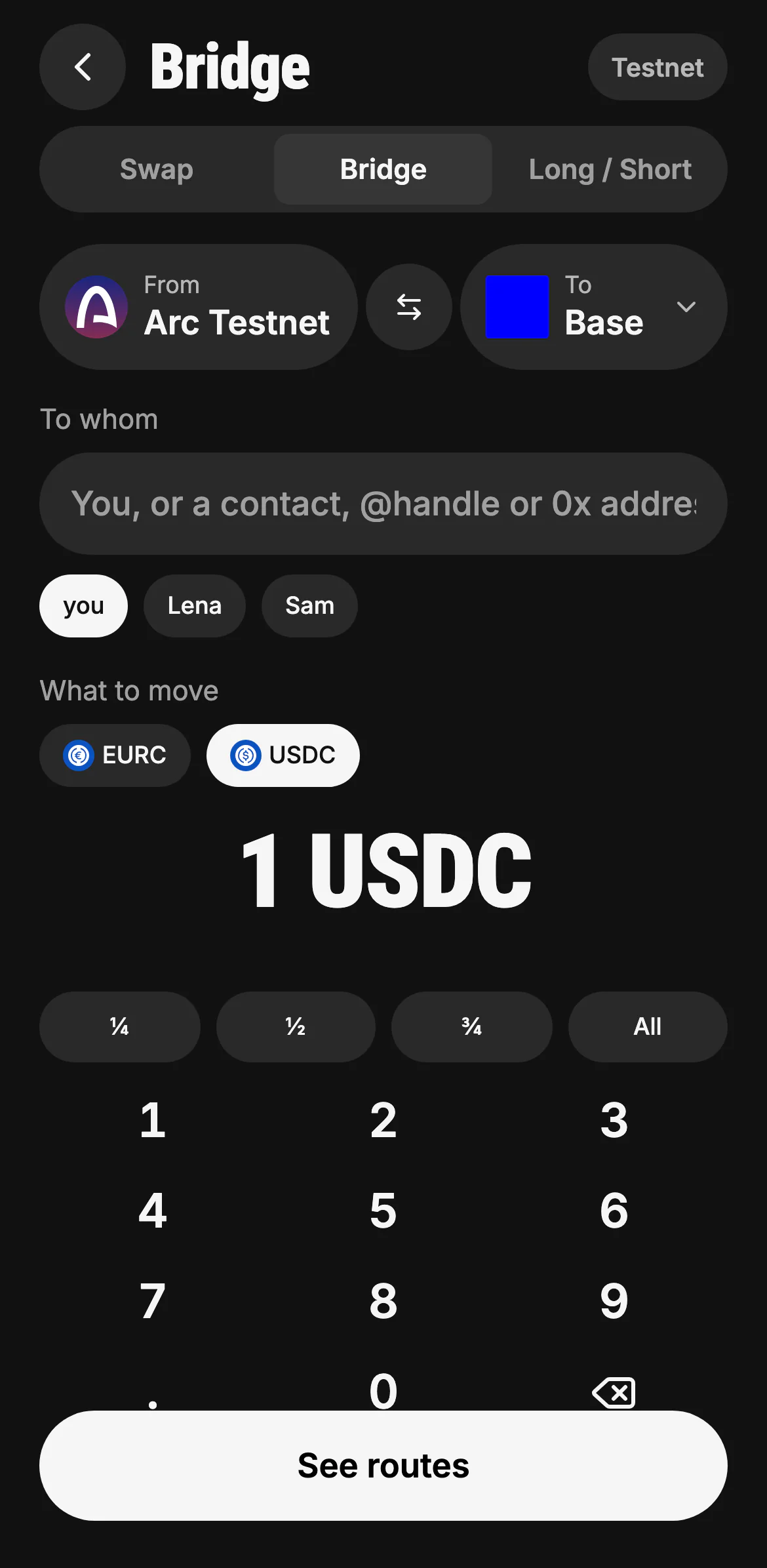
The recipient can be you (the same address on the other chain), a contact, an @handle or any 0x address. Pick USDC or EURC and the amount.
- From Arc
- To the chain you chose
- You, a contact, an @handle or an address
- What to move
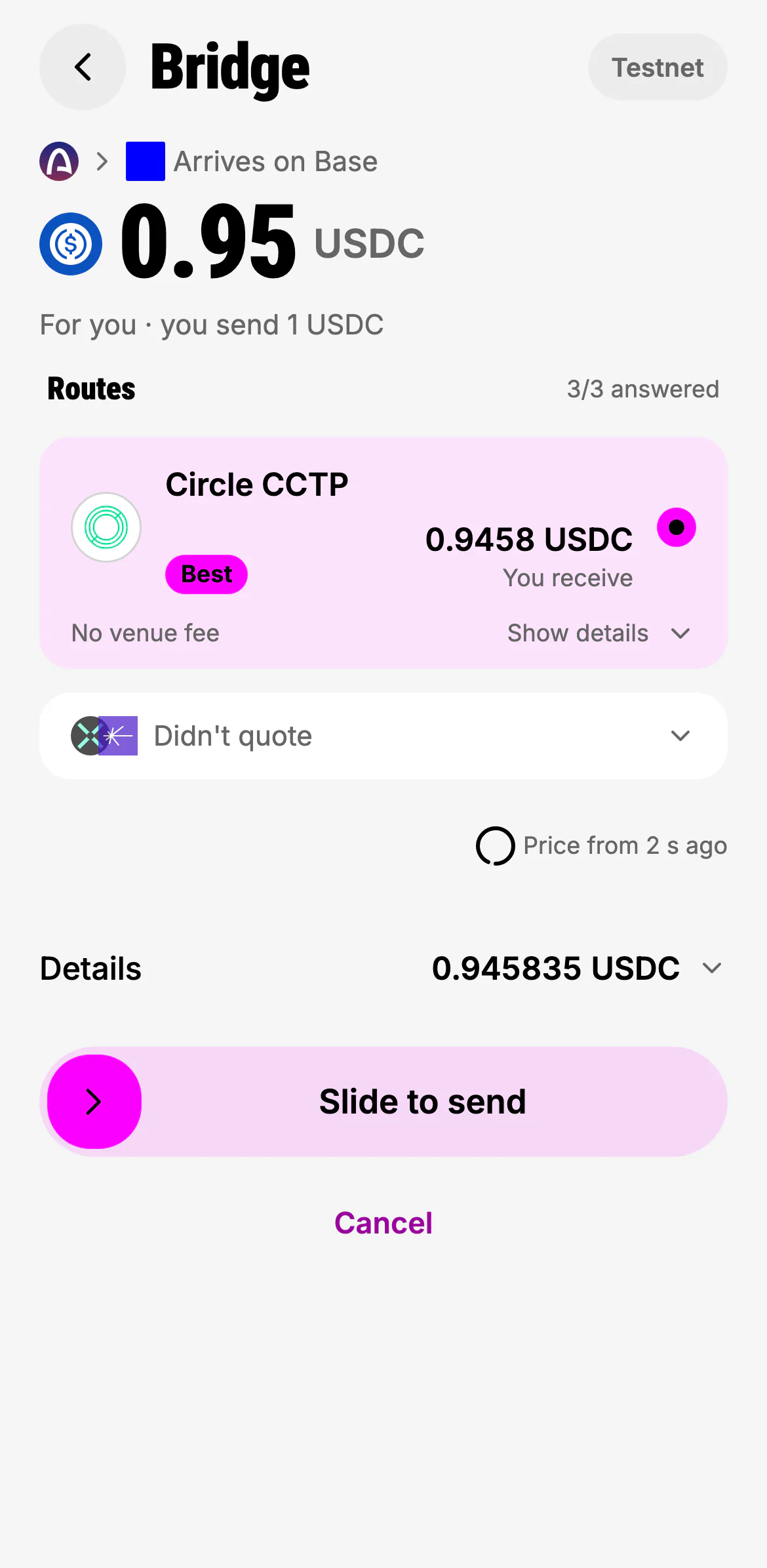
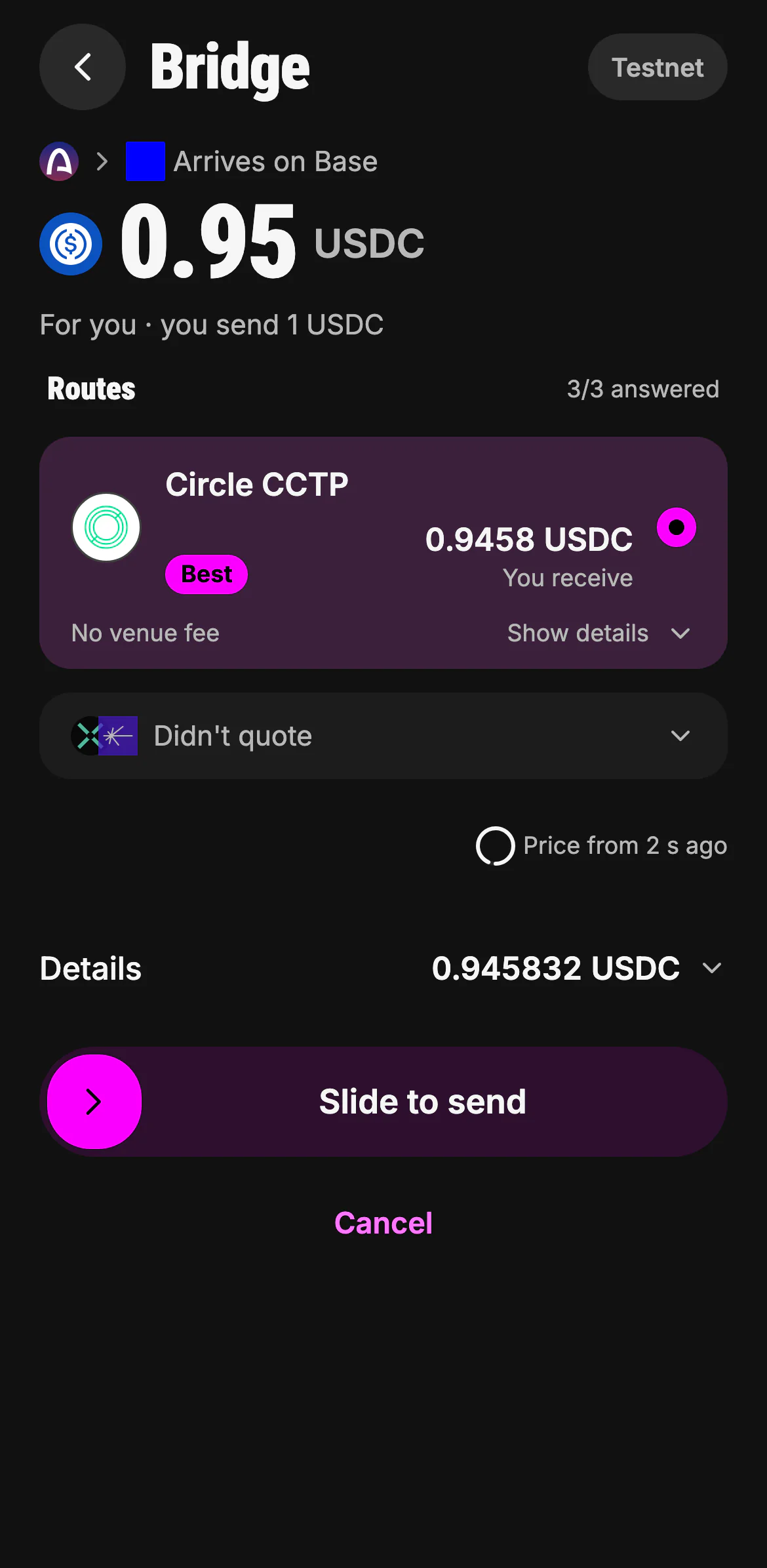
Circle CCTP, Across, Relay, LI.FI, deBridge, Socket and Gas.zip are asked for a live quote. They are ranked by what arrives after fees, ties going to the faster one; the best is picked and you can tap another. Before your wallet is asked, Kawase builds the chosen route and checks it (who pays, who receives, the token, the amount, the minimum, the destination), then simulates it from your wallet.
- What arrives, on which chain
- The winning bridge, what you receive, its fee
- Slide to send
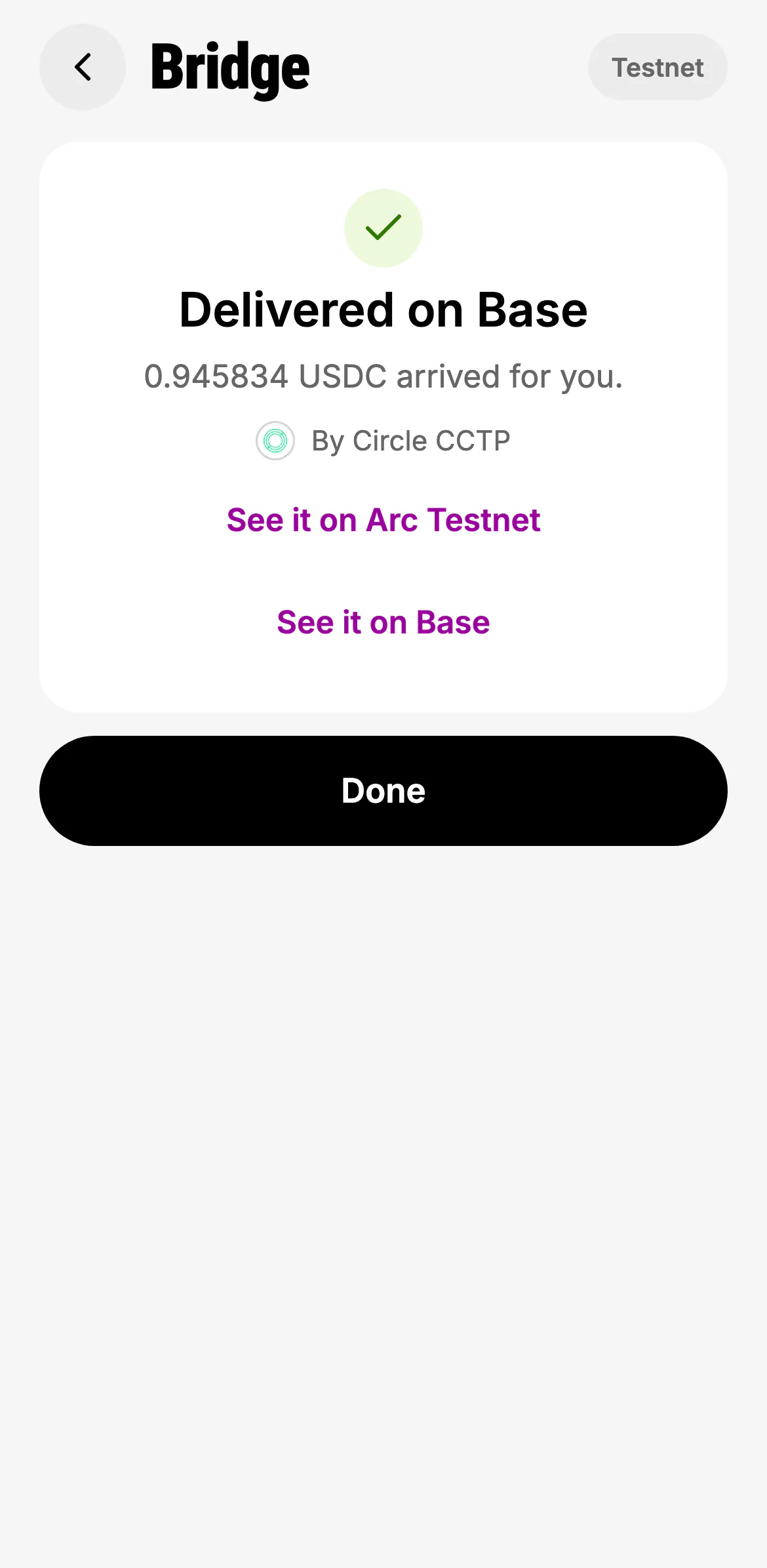
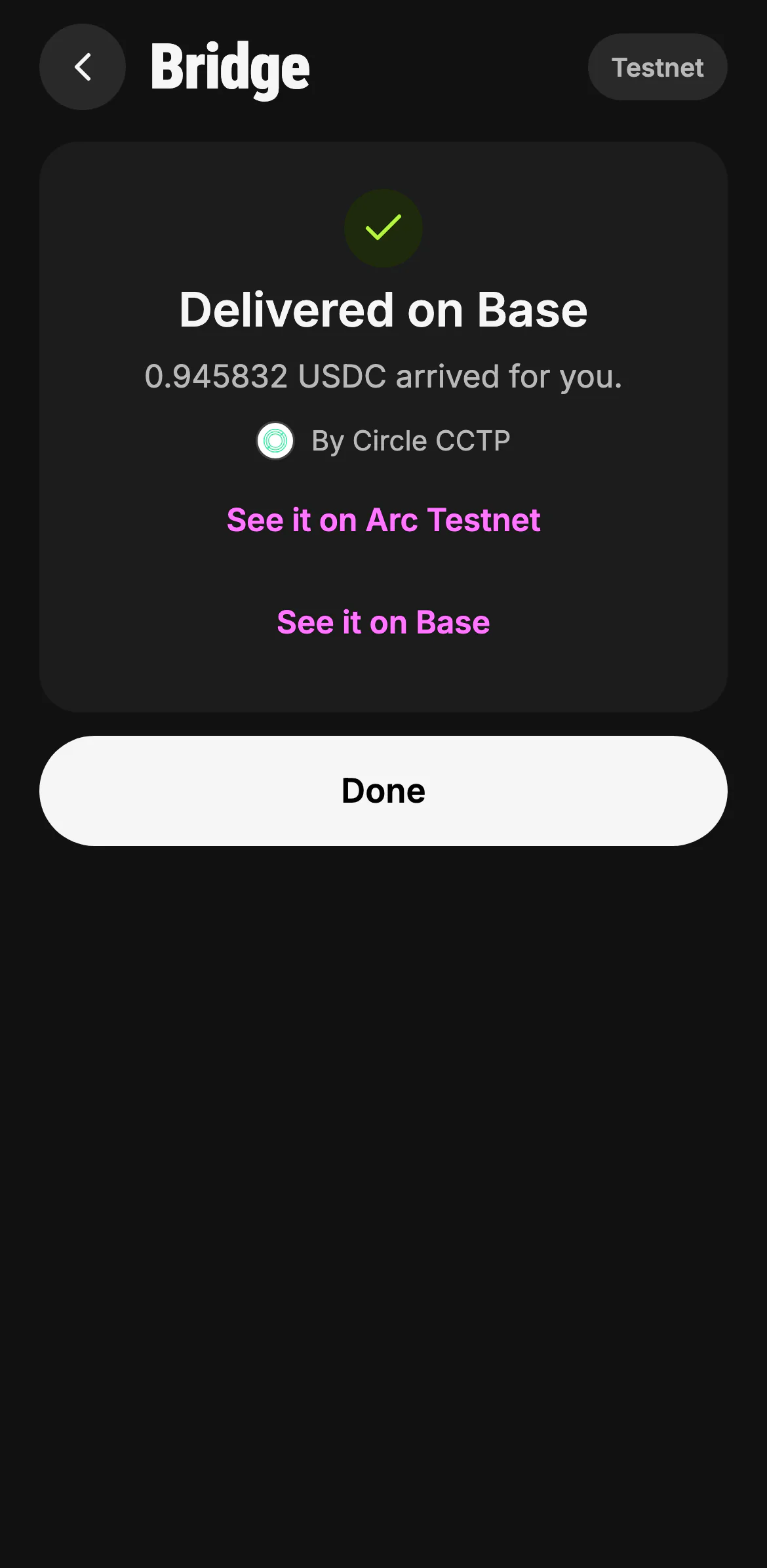
Every move is followed: Signed → Sent → Arriving → Delivered, with explorer links on both chains. Kawase checks the amount that left your wallet, then the fill through the bridge's own status (Circle's attestation, Across's deposit status, Relay's request status). If a bridge refunds instead, the card says so. Nothing is sent twice.
- What arrived, and by which bridge
- See it on both chains
Their wallet is on another chain? The Send review offers the bridge with the same amount and recipient.
Bring USDC to Arc
If you hold USDC at the same address on another network, Add money → From another chain finds it (the largest balance first) and brings it to Arc with Relay's permit: one signature and no gas needed on that network. The permit is checked (your address, the amount, Relay's contract and that network's USDC) and the move is simulated on the chain before you sign. Mainnet only.
Withdraw
Withdraw takes one token, several or everything out of Kawase, in one confirmation.
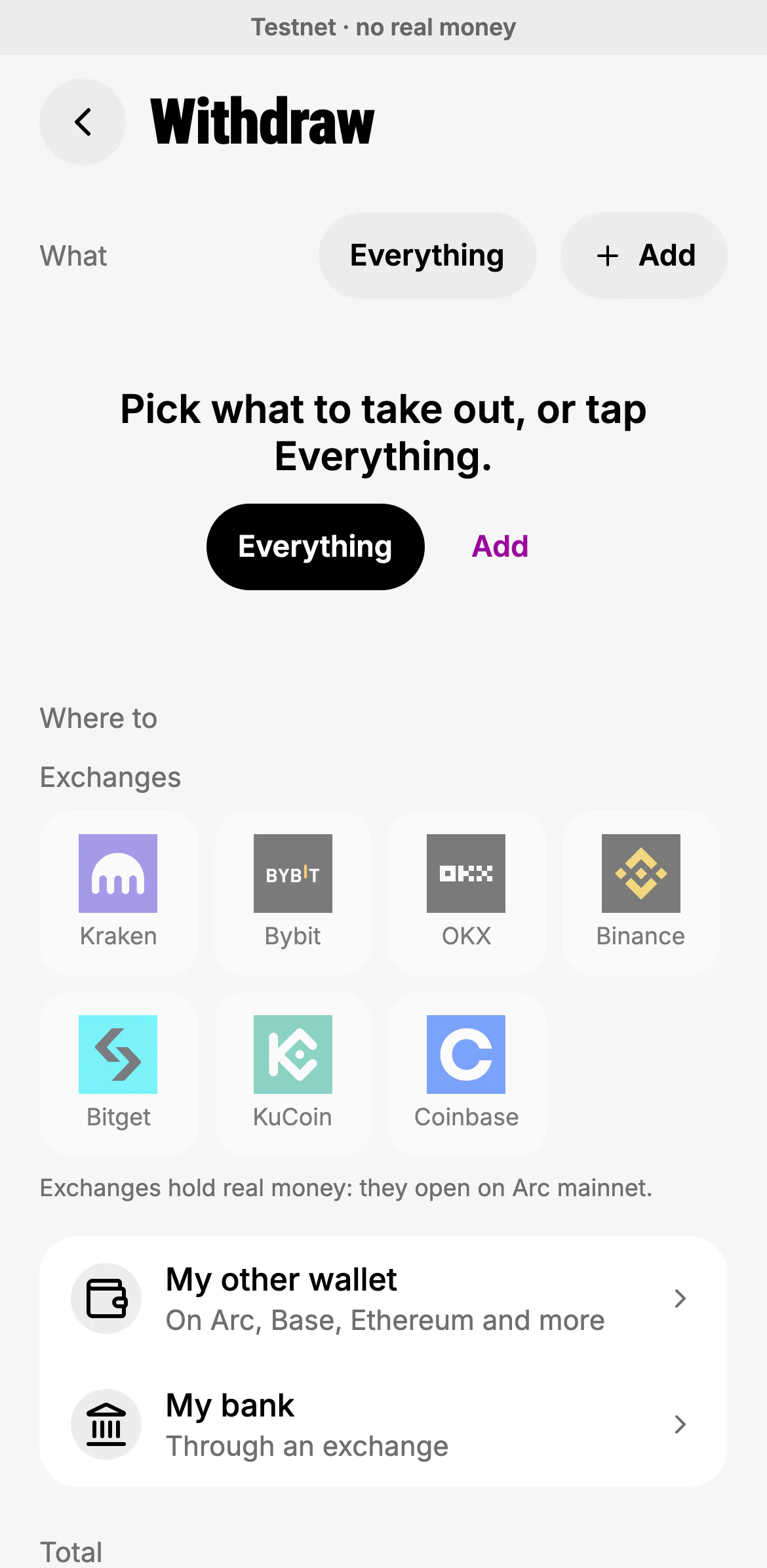
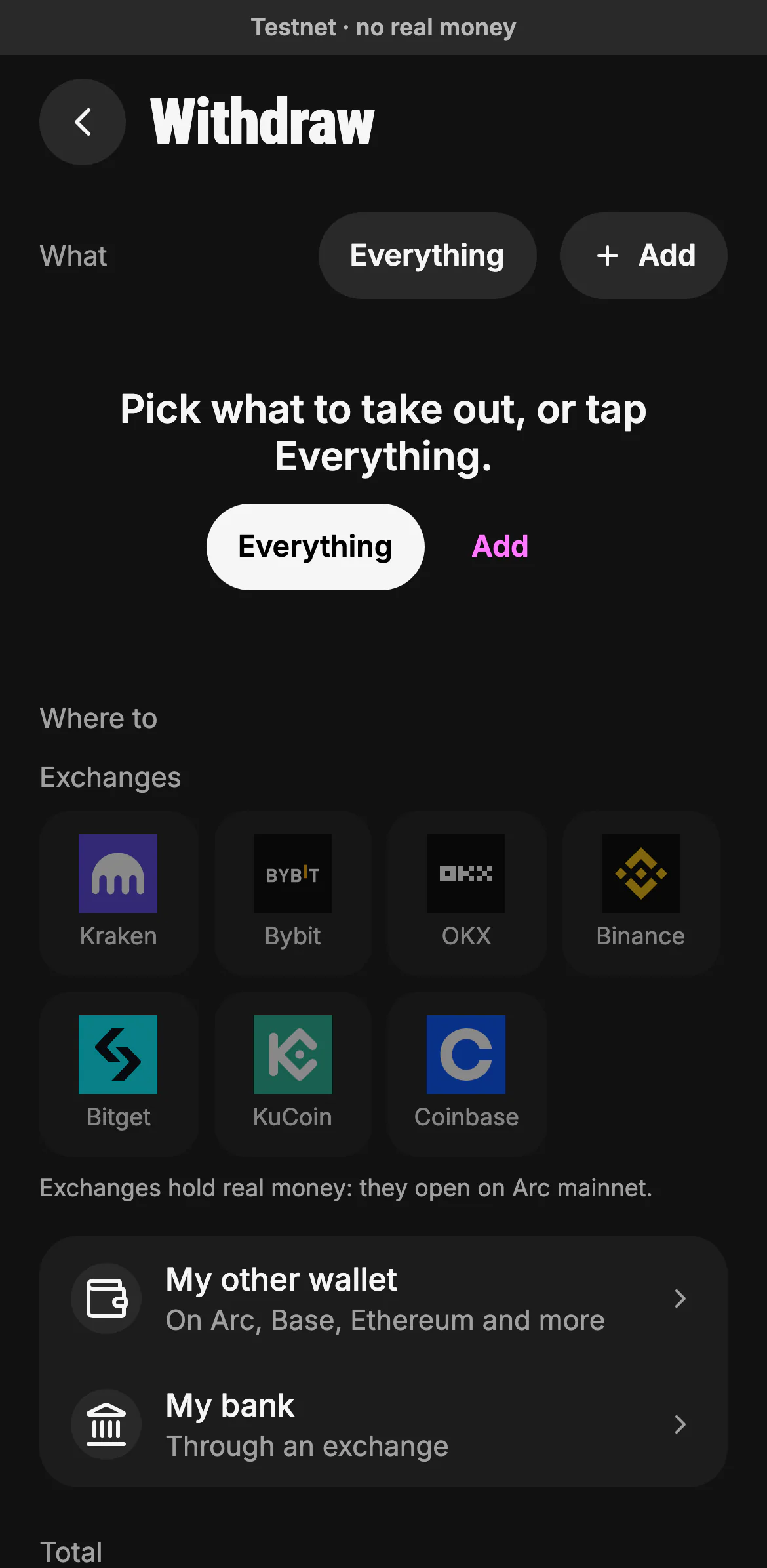
Pick tokens or tap Everything; each goes as itself or as cash (converted to USDC first). Then where: an exchange (Kraken, Bybit, OKX, Binance, Bitget, KuCoin, or Coinbase through Base), your other wallet on Arc or another chain, or your bank through an exchange. Kawase knows which assets and networks each exchange accepts and warns you before you send something it would not credit.
- Everything, or pick tokens
- Exchanges, with their own steps
- Your other wallet, on any chain
- Your bank, through an exchange
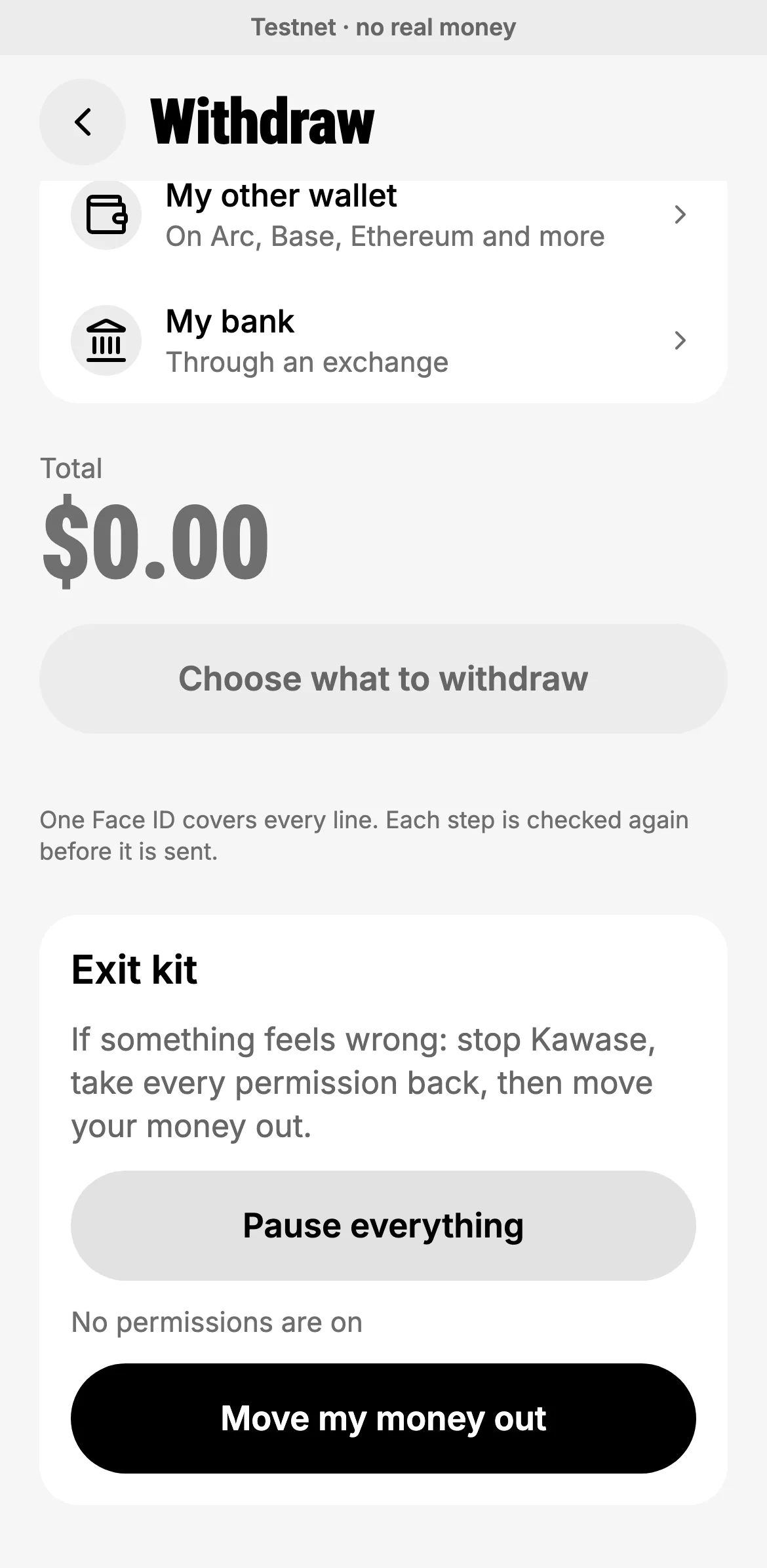
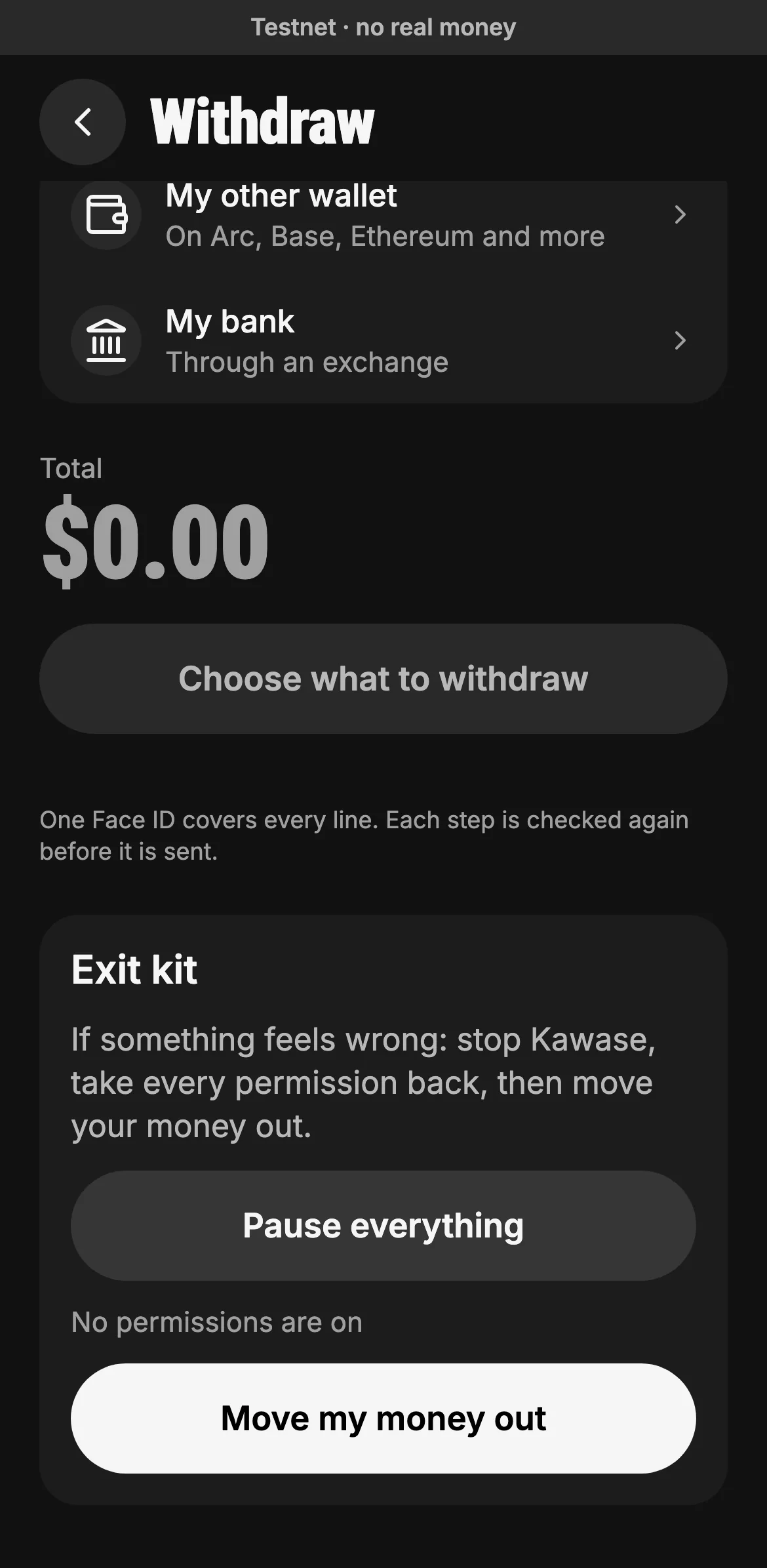
Kawase plans a line per token (a transfer on Arc, a bridge, or a conversion first). One Face ID covers every line, and each step is checked again before it is sent. A tracker follows every line; if something stops half way, Finish it picks up where it was. The exit kit sits under it: pause Kawase, take every permission back, then move your money out.
- The exit kit
- Pause everything Kawase does on its own
- Move my money out: Withdraw, for everything
Places you withdraw to are saved in Contacts → My places. Exchanges hold real money, so they open on Arc mainnet; on testnet, withdraw goes to your own wallet. To take your money out without Kawase at all, follow Withdraw without Kawase.
On testnet
Arc Testnet bridges with Circle CCTP (the others answer that they aren't on that network), to the testnets of the same six chains. Bring USDC to Arc and exchanges are mainnet only.
Bridge to and from Arc
What runs today
- any asset from Arc to anyone on Base, Ethereum, Arbitrum, OP Mainnet, Polygon or Avalanche: USDC through Circle CCTP, Across, Relay, LI.FI or deBridge; other assets (WETH, EURC, cirBTC, a meme by symbol or address) arrive as themselves through LI.FI or deBridge (cirBTC as cbBTC), or as USDC when nothing carries them, swapped on Arc in the same batch; ranked by what arrives after fees (deBridge's 1 USDC flat fee counted), up to three shown, one Face ID
- Bring to Arc: USDC with Relay's permit (one signature, no gas there); the chain's own coin (ETH, POL, AVAX) in one transaction there, its gas from the coin, arriving as WETH etc.; other tokens with one Permit2 signature, and when a token is not yet approved for Permit2 there, in two steps under one yes: that approval first (one transaction there, its gas in the chain's coin), then the signature
- following each move until delivered (Across, Relay, LI.FI, deBridge, CCTP status) and saying plainly when a provider refunds
- on Arc Testnet: CCTP only
Not yet
- Bring to Arc without the chain's coin for gas when the token still needs its approval there
- Bring to Arc on testnet
- recovering a stuck transfer beyond the provider's own refund
Send money
What runs today
- any token the person holds on Arc, to a saved contact, a Kawase @handle, an address they type or scan, with the recipient check on every payment: a token contract or a look-alike of a saved contact is refused, a non-wallet contract is warned about, the issuer's blocklist is checked where the token has one, and their own address is named
- inside the daily allowance it goes at once; above it, to a new address or for a token outside the allowance, the person confirms with Face ID (an email code on the web)
- USDC to someone on another chain (Base, Ethereum, Arbitrum, OP Mainnet, Polygon, Avalanche) through the best bridge route; on mainnet any other token too, as itself, through the cross-chain routes (the Move screen)
- Withdraw: one token, several or everything, each as itself or as cash, to an exchange (Kraken, Bybit, OKX, Binance, Bitget, KuCoin, Coinbase via Base), the person's own wallet on Arc or another chain, or their bank through an exchange; the route is planned per token (transfer, bridge or convert first) and confirmed once
Not yet
- inside one withdraw batch, tokens other than USDC go to another chain as cash (converted); as themselves they go as a separate move (the line offers it, mainnet)
- exchanges on testnet (withdraw goes to the person's own wallet there)